I learned this the hard way during my second year selling real estate. After spending hundreds of dollars on a lead generation campaign, I watched pot...
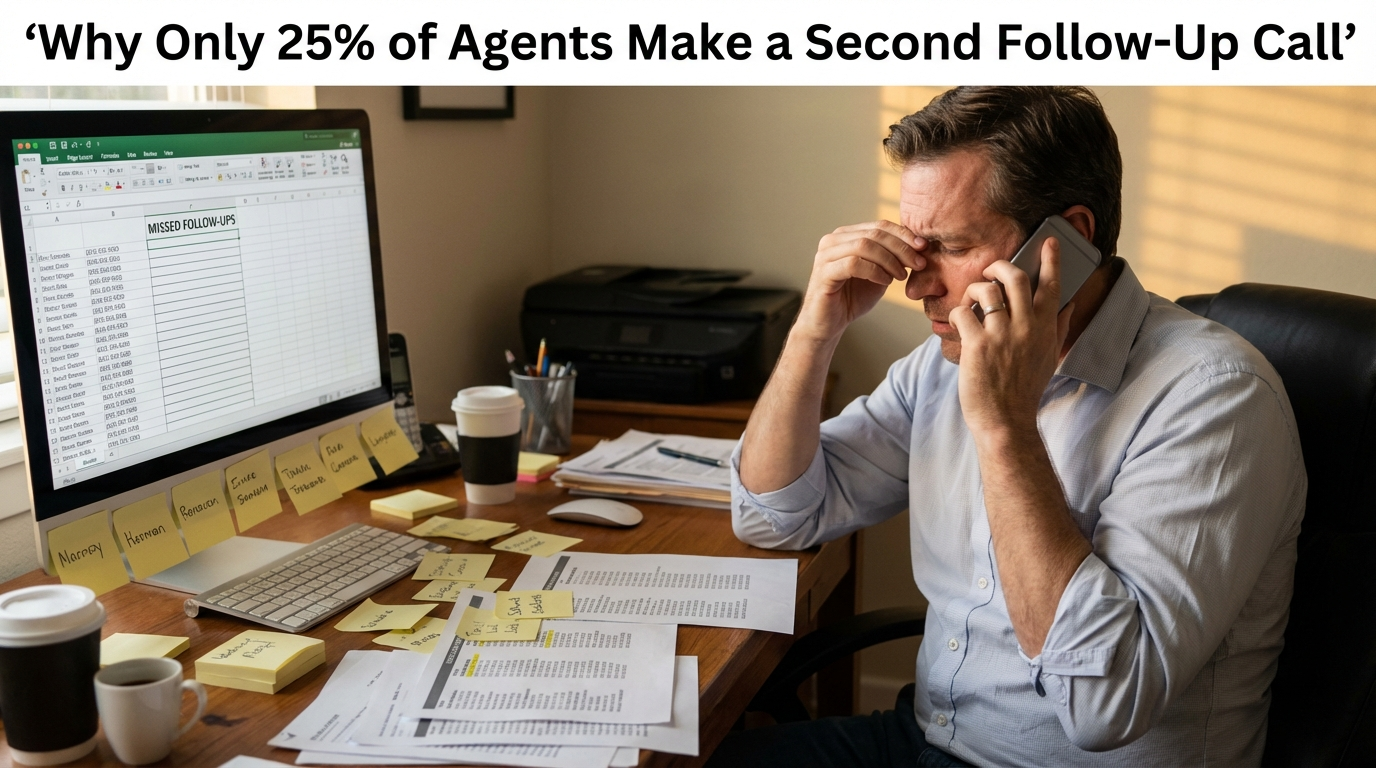
I learned this the hard way during my second year selling real estate. After spending hundreds of dollars on a lead generation campaign, I watched potential clients slip through my fingers because I couldn't keep up with follow-ups. The statistics are brutal: 48% of real estate agents don't follow up after their first call, only 25% make a second attempt, and fewer than 10% make three or more follow-up calls.
These numbers represent more than just missed opportunities - they reveal the harsh reality of what it's like to juggle lead generation, client service, and basic human psychology in today's competitive market.
The Psychology Behind Follow-Up Failure
Let's be honest about what really happens when we don't follow up. It's not laziness or lack of caring - it's the psychological weight of constant rejection combined with an overwhelming workload that makes follow-up feel impossible.
Every unanswered call feels personal. When you reach out to a lead for the first time and get voicemail, there's still hope. Maybe they're busy, maybe they didn't see your number, maybe they're genuinely interested but just need time. But that second call? That's when the doubt creeps in. "Maybe they're avoiding me. Maybe I'm being pushy. Maybe they've already chosen another agent."
By the third attempted contact, many agents have convinced themselves they're becoming a nuisance. The fear of appearing desperate or annoying becomes stronger than the potential reward of converting the lead. This is especially true when you're already dealing with rejection from other prospects throughout your day.
The Overwhelming Reality of Lead Management
Here's what a typical week looks like for most agents: You're showing properties to existing clients, writing offers, negotiating contracts, coordinating inspections, attending closings, and somehow trying to find time to generate new leads. Now add systematic follow-up to that list, and something has to give.
When you're working with hot leads who are ready to buy or sell immediately, it's easy to justify putting follow-up calls on the back burner. The problem is that those "cold" leads you're not following up with often just need more time to make their decision. Research shows that 80% of sales require five or more follow-up attempts, but most agents stop after one or two.
I've watched agents spend thousands on lead generation only to let perfectly good prospects go cold because they couldn't maintain consistent contact. It's like planting a garden and then forgetting to water it - all that initial investment goes to waste.
The Time Management Trap
Follow-up isn't just about making phone calls. Effective follow-up requires tracking when you last contacted each lead, what you discussed, what their specific needs are, and when you should reach out next. Without a system, this becomes a mental juggling act that's impossible to sustain.
Many agents try to keep track of follow-ups using sticky notes, spreadsheets, or their phone's contact list. These makeshift systems work for a handful of leads, but they break down quickly as your database grows. When you can't remember who you called when, it becomes easier to just focus on new leads instead of nurturing existing ones.
The irony is that following up with existing leads is often more cost-effective than generating new ones. You've already invested money to acquire those leads - following up is just maximizing your return on that investment.
The Compound Effect of Inconsistent Follow-Up
When agents don't follow up consistently, they create a vicious cycle. Poor follow-up leads to lower conversion rates, which means they need to generate more leads to hit their sales goals. More leads mean more follow-up requirements, which becomes even more overwhelming, leading to even worse follow-up rates.
I've seen agents get trapped in this cycle, constantly chasing new lead sources instead of maximizing the value of leads they already have. They'll switch from Facebook ads to Google ads to direct mail, thinking the problem is lead quality, when the real issue is lead nurturing.
The agents who break out of this cycle are usually the ones who realize that lead conversion is as important as lead generation. They understand that a smaller number of well-nurtured leads will outperform a large number of poorly managed ones.
Building a Follow-Up System That Actually Works
The solution isn't just about making more phone calls - it's about creating a systematic approach that removes the psychological barriers and time management challenges that prevent consistent follow-up.
First, you need to reframe follow-up in your mind. Instead of seeing it as bothering people, think of it as providing value. Each follow-up should offer something useful - market updates, new listings, helpful tips, or answers to questions they might have. When your follow-up provides value, you're not being pushy; you're being helpful.
Second, automate what you can. Email sequences, text message campaigns, and social media retargeting can maintain contact with leads between personal phone calls. This keeps you top-of-mind without requiring constant manual effort.
Third, set specific follow-up schedules and stick to them. If you decide to follow up with new leads after 1 day, 1 week, 2 weeks, and 1 month, put those activities in your calendar just like you would any other appointment. Treat follow-up time as sacred - don't let other activities crowd it out.
The Technology Solution
Modern CRM systems can eliminate most of the friction that prevents consistent follow-up. Good systems will automatically remind you when to contact leads, track your conversation history, and even suggest what to say based on where each lead is in your sales process.
But technology is only as good as the system behind it. You need clear processes for how leads move through your pipeline, what information gets tracked, and what triggers different types of follow-up activities.
The key is finding a system that fits your working style. Some agents prefer detailed notes and complex workflows, while others need something simple they can manage on their phone between appointments. The best system is the one you'll actually use consistently.
Why Professional Lead Generation Services Make Sense
Given all these challenges, it's worth considering whether you should be handling lead generation and follow-up management entirely on your own. Professional services can provide consistent lead flow with built-in nurturing systems, freeing you up to focus on what you do best - working with clients who are ready to buy or sell.
When you work with a service that provides both leads and the tools to manage them effectively, you eliminate many of the bottlenecks that cause follow-up to fail. You get consistent lead flow without the time investment of running your own campaigns, plus systems designed specifically for real estate follow-up.
The math is simple: if better follow-up systems help you convert even 10% more of your leads, that increase in conversion rate quickly pays for professional services while reducing your workload.
Taking Action on Follow-Up
The follow-up statistics don't have to apply to you. With the right mindset, systems, and tools, you can be among the small percentage of agents who consistently nurture their leads through to conversion.
Start by auditing your current follow-up process. How many leads from the past six months did you contact only once? How many could still be viable prospects if you reached out today with valuable information?
Then commit to a simple but consistent follow-up schedule. Even if you only commit to making second follow-up calls, you'll immediately be ahead of 75% of your competition.
Ready to solve your lead generation and follow-up challenges with a system designed specifically for real estate agents? Reserve your territory with Clozings and get access to consistent leads plus the CRM tools you need to nurture them effectively. Stop letting good leads slip away due to poor follow-up - let us help you build a sustainable system for long-term success.